

Light for the Lifted Foot

Michael Ryer • January 15, 2026

This series is written by Michael Ryer and sponsored by Amigos Internacionales

Light blue circle with two opposing, curved white shapes resembling bird wings.
Collage of photos: Children with adults; planting trees, water pump, learning, smiling. Text about planting trees.

Share this article

Why God Rarely Shows the Whole Path

“Your word is a lamp to my feet
and a light to my path.”
—Psalm 119:105

Most of us would prefer Scripture to function like a floodlight.

We want God to illuminate the entire road ahead—every turn, every obstacle, every cost—before we take the first step. We want clarity before commitment and certainty before obedience. And when we don’t get that kind of visibility, we often hesitate, waiting for God to show us more before we move.


But Scripture promises something far more modest—and far more relational.


Not a floodlight.

 A lamp.


A lamp does not show the entire journey.

It shows just enough—a light for the lifted foot.


When God Invites You Without Explaining Everything


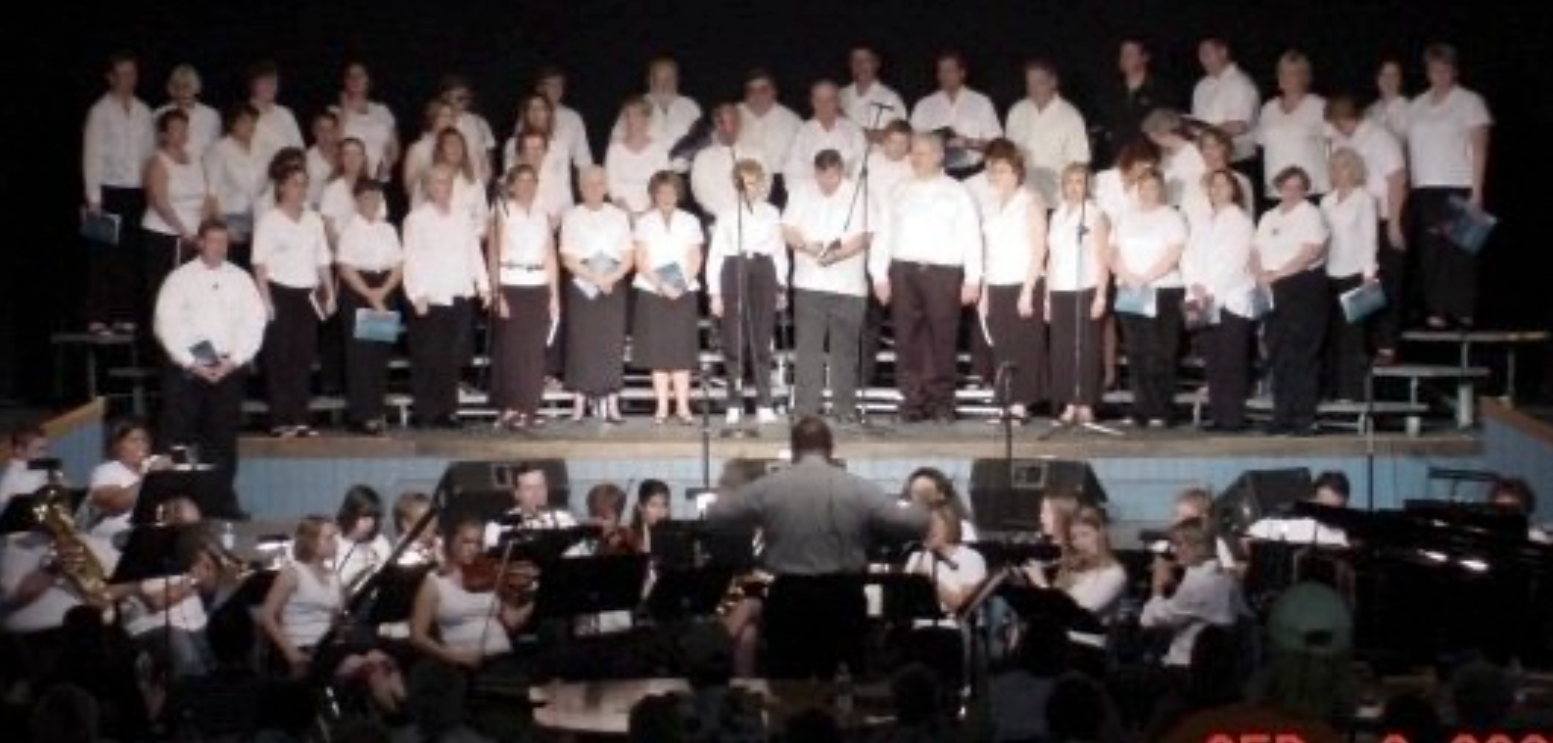
Choir and orchestra performing on stage; conductor faces performers, who wear white shirts and dark bottoms.


Years ago, I experienced this truth in a way that permanently reshaped how I understand God’s guidance.

At the time, I had been involved for many years in producing large-scale musical worship experiences—choirs and orchestras working together to tell the story of Scripture through music. At our church, we had just completed a major presentation of Experiencing God, the Musical, involving nearly ninety choir members and around forty musicians in the orchestra.

It was a demanding season, and honestly, I assumed it was finished.

Then I received a phone call.

A church a few hours away reached out and asked if I would be interested in conducting their choir and a local university orchestra for a future performance. Their Minister of Music had resigned unexpectedly after planning the event, and they were trying to determine how—or if—it could still happen.

I agreed. It seemed reasonable. Manageable. A good opportunity.

That was the first step.

A few weeks later, they called again. There was a scheduling conflict with their orchestra. Would it be possible, they asked, for our orchestra to come instead?

I told them I would ask—but privately, I didn’t expect the answer to be yes. Transporting an orchestra meant time, expense, late travel, and a significant commitment from people who had already given generously.

But when I brought it to the group, the response was immediate and unanimous.

They wanted to go.

The opportunity had grown—but only after the first step was taken


When God’s Work Expands Beyond Your Plans

Not long after that, the church called again. With the loss of their music leader, enthusiasm for the musical had begun to fade in their congregation. They wondered aloud if perhaps a few members of our choir might be willing to come and support the effort.

Again, I assumed we might find a handful of volunteers.

Instead, the entire choir wanted to come.

What had started as a modest invitation now required transporting singers, musicians, instruments, equipment—an enormous logistical and financial commitment. Each step forward expanded the scope, the cost, and the faith required.

And yet, something unmistakable was happening.

As word spread, excitement returned—not only within the host church, but throughout the community. It soon became clear that the church building itself was too small to hold what was unfolding. Plans shifted again, and the presentation was moved to the local community center.

More adjustments. More unknowns.

Then something unexpected happened.

People outside the church began asking if they could participate. Friends. Community members. Even my dentist—who played the French horn—asked if he could join the orchestra. One by one, people heard about what God was doing and wanted to be part of it.

By the time presentation day arrived, what had begun as a small opportunity had grown into a city-wide event.

There were over 130 singers.
Nearly 50 orchestra members.
A packed auditorium filled with people from across the community.

God was glorified.
Faith was strengthened.
And a city experienced something far larger than any of us had planned.

Why God Rarely Shows the Whole Picture

Looking back, I often think about what would have happened if God had shown me the entire picture at the beginning.

If He had revealed the full scope—the travel, the logistics, the expense, the continual adjustments—I’m not sure I would have said yes. Not because I lacked faith, but because the weight of the unknown would have felt overwhelming.

Instead, God gave just enough light for the next step.

And with each step, our faith grew.
Our understanding deepened.
Our willingness expanded.

God’s work rarely arrives fully formed. It unfolds.

Scripture never promises clarity for the entire journey. It promises guidance for the next faithful movement. God is not withholding information to frustrate us; He is inviting us into relationship. Trust grows not when we see everything ahead, but when we learn to walk with Him step by step.

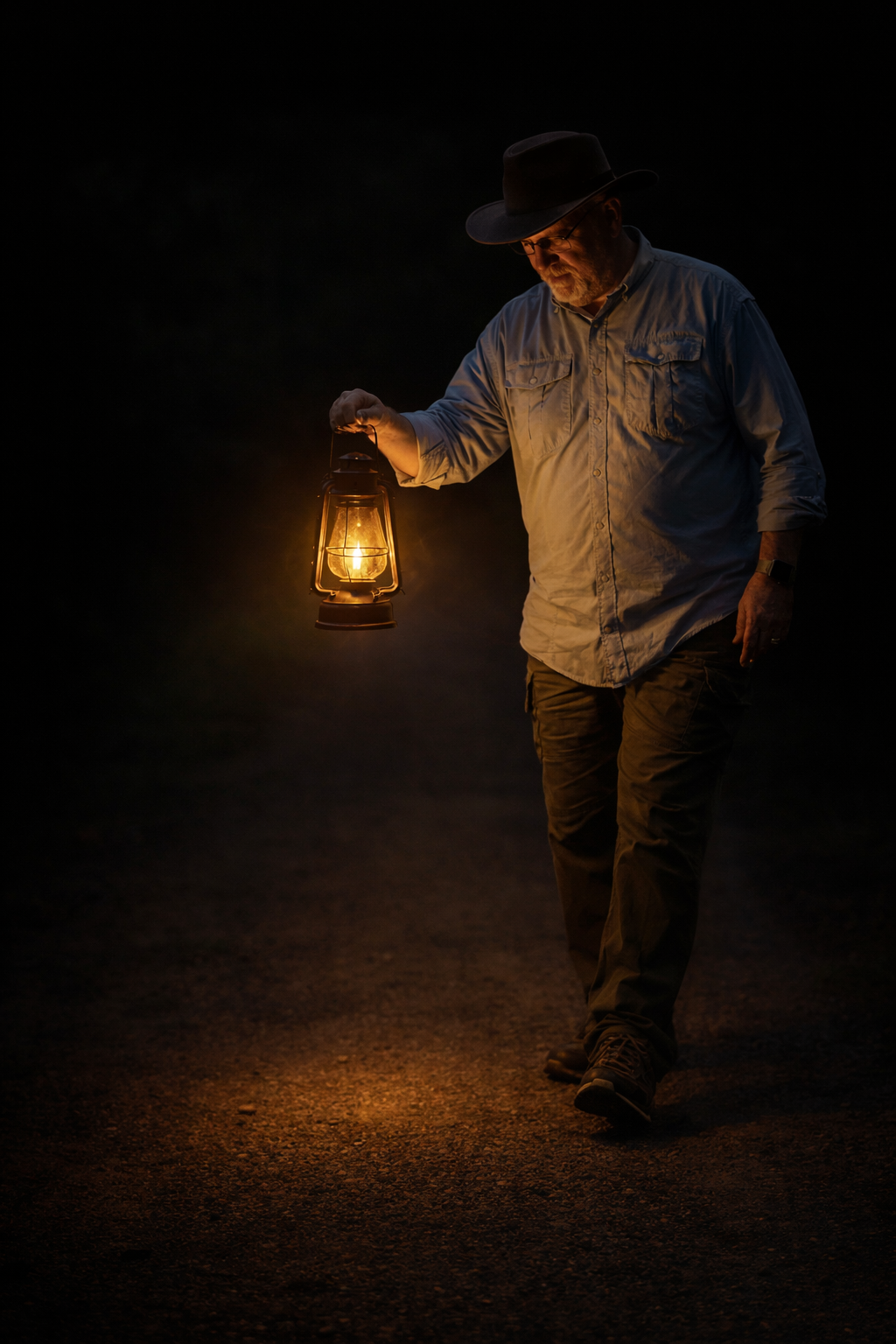
Michael Ryer,  holding lantern, walks in dark. Lantern light illuminates him and ground.

The Quiet Wisdom of a Lamp

A lamp teaches us something a floodlight never can.

It teaches patience.
It teaches attentiveness.
It teaches dependence.

When Scripture becomes a lamp to our feet rather than a blueprint for our future, we stop demanding certainty and start practicing trust. We learn to lift our foot before we see the entire path. And we discover—again and again—that God meets us in motion.

If you are waiting for God to show you everything before you move, consider this: He may already be giving you exactly what you need.

Not clarity for the whole road.
Just enough light for the lifted foot.

And that has always been enough.

Recent Posts

Two people reading a book together; one points to the open pages.
By Michael Ryer January 20, 2026
Many people come to the Bible with sincere intentions and crowded hearts. They want guidance. They want clarity. They want reassurance that God is present and leading. Yet they often leave Scripture feeling unchanged—not because God was silent, but because there was never enough room to truly listen. For many believers, the challenge is not motivation. It is margin. We live in a culture that rewards speed, efficiency, and constant engagement. That mindset quietly follows us into our spiritual lives. We read Scripture the way we read emails or news headlines—quickly, purposefully, and with an unspoken expectation that it should deliver something useful and move us on to the next thing. When it doesn’t, frustration sets in. But Scripture was never meant to compete with our pace. It invites us to change it.  Meeting God in His Word begins not with better tools or stronger discipline, but with space—space to be present, to listen, and to allow God to speak without being rushed.
By Michael Ryer January 16, 2026
Obedience Before Understanding One of the most common questions people ask about following God is also one of the most revealing: Why doesn’t God just show me what’s coming next? If God knows the future—if He sees the entire road ahead—why does He so often give us only partial clarity? Why does obedience so often require movement before explanation? After reflecting on Scripture as a light for the lifted foot , the question becomes unavoidable. If God is already calling us to obey, why does He not simply reveal the whole plan? The answer is both simple and demanding. Because obedience is not a suggestion. It is the defining mark of love for Christ.
Collage for Amigos Internacionales with children, trees, and quote
By Michael Ryer January 15, 2026
An Invitation to a Slower, Deeper Way of Reading Scripture There are few things more familiar—and more quietly confusing—than the Bible. Many of us have read it for years. We know the stories. We recognize the verses. We understand its importance. And yet, somewhere beneath our faithfulness, a quieter question often lingers: How is this meant to shape my life right now? For some, Scripture has become informational. For others, intimidating. For many, it has become something we believe in deeply but struggle to engage with meaningfully. We read, but we aren’t always sure how listening turns into discernment, or how knowledge becomes trust, or how words on a page translate into faithful movement in real life. This series begins there. Not with answers to master, but with a posture to recover. From Studying the Bible to Encountering God
